 Indar
AI calorie counter from a photo
Take or upload a photo of your meal and get each food's calories, protein, carbs and fat, usually in under 10 seconds. It's the same estimate the Indar app makes, free, with no sign-up.
- Free, 3 photos a day, no sign-up
- Each food named, with its portion and calories
- We don't keep your photo. How it's handled
How it works
Your photo is made smaller in your browser (1,024 pixels on the long edge) and saved again, which removes its location data. Our server sends it to the same model with the same instructions the Indar app uses: Google's Gemini, told to size up the plate or bowl first, then weigh each food from how much of it covers and how deep it is, and to count what a photo hides, like the milk in a coffee or the oil food was fried in. If Gemini doesn't answer, Anthropic's Claude reads it instead.
Each food's numbers come from standard food composition tables (USDA FoodData Central, AUSNUT) for the amount it sees, with energy checked against protein, carbs and fat. A nutrition panel or energy printed on a pack in the photo is used exactly. For a branded product or a chain's menu item, it uses the published numbers for the country you're connecting from.
How accurate it is
On 150 cafeteria meals photographed from above and weighed ingredient by ingredient (Nutrition5k, from Google Research), checked on 2 November 2026 with the setup this page uses:
- The typical estimate was 23% off the measured calories (half were closer, half further).
- 44 in 100 were within 20%. On average the estimates ran about 5% high.
- Simple, separate foods come out closest. Oil, butter, sauces, mixed dishes and food hidden under other food are the hardest to see in any photo.
So use it to see roughly where a meal stands, not as a measurement. For a number you'll act on, weigh the food, or read the label. In the app you can change any amount in a tap, and a weighed amount replaces the estimate. How to track calories compares photos with labels, barcodes and weighing.
Getting a better estimate
- Fit the whole plate, bowl or pack in the photo, from above or at a slight angle.
- Good light, no blur. Something of known size in the frame (a fork, a hand, a can) helps judge portions.
- For packaged food, show the nutrition panel or the front of the pack.
- One meal per photo: food on other plates at the edge can be counted in.
Who this isn't for
These are estimates for healthy adults. With a medical condition that depends on exact amounts (diabetes and insulin dosing, kidney disease), weigh food and follow your care team. If tracking food has ever been hard on you, it's worth talking to someone first: in the US, the National Alliance for Eating Disorders on (866) 662-1235; in the UK, Beat on 0808 801 0677; in Canada, NEDIC on 1-866-633-4220; in Australia, the Butterfly Foundation on 1800 33 4673; in New Zealand, EDANZ on 0800 233 269; anywhere else, your doctor or a local eating disorder service.
Common questions
How accurate is an AI calorie counter?
Good enough to start from, not to trust blindly. On 150 meals that were weighed ingredient by ingredient, the typical estimate from one photo was 23% off the measured calories, and 44 in 100 were within 20%. Simple, separate foods come out closest; oil, sauces and mixed dishes are the hardest to see.
What happens to my photo?
It's made smaller in your browser, which also removes its location data, then sent to our server and on to Google's Gemini to estimate the food, or Anthropic's Claude if Gemini can't answer. Neither trains on it. We don't keep it: Anthropic deletes it within 30 days and Google keeps it briefly only to check for abuse.
Is it free?
Yes, with no sign-up: 3 photos a day from each internet connection. The Indar app's free plan logs one meal photo and three typed or spoken meals a day (three photos a day for your first three days, and a retake of the same meal is free), and Indar Pro raises that to 15 meal photos a day.
How do I get a better estimate?
Fit the whole plate or bowl in the photo, from above or at a slight angle, in good light. A fork, a hand or the pack in the frame helps judge the size. For packaged food, show the label: printed numbers are used exactly.
Can it read packaged food and takeaway?
Yes. With a nutrition panel or the energy printed on the pack in the photo, it uses those numbers. For a branded product or a chain's menu item it looks up the published nutrition for the country you're in.

Every meal, not just this one
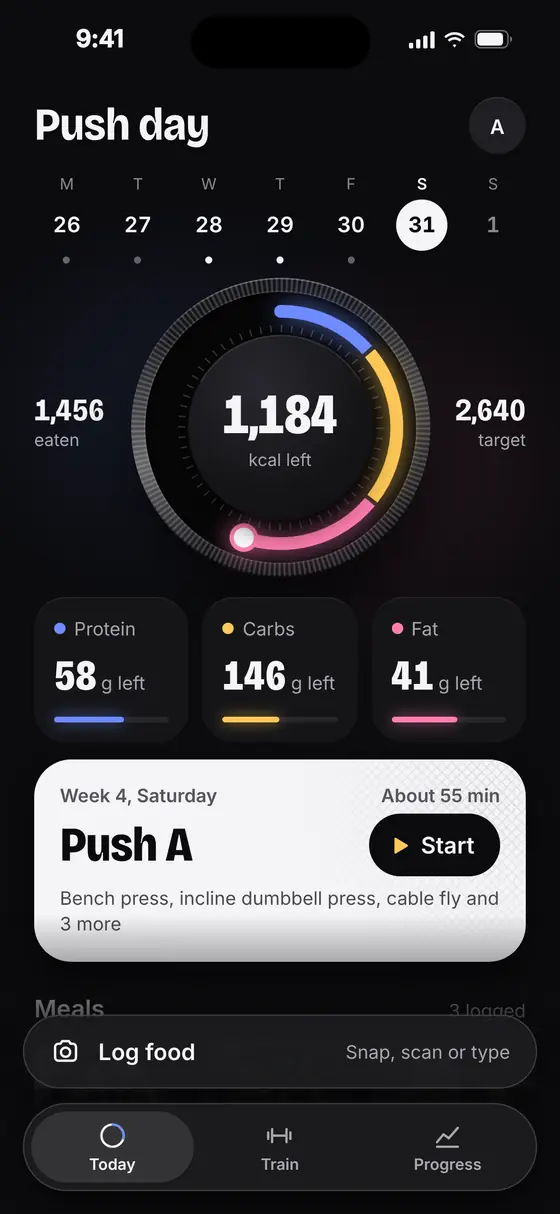
The Indar app builds your training plan and your calorie and protein targets, then logs each meal from a photo, a barcode or a sentence, and shows what's left for the day. Change any amount in a tap. Free to download; yearly Pro starts with a 7-day free trial.


On Android? Get it on Google PlayOn iPhone? Get it on the App Store
Scan with your phone's camera to get Indar.
Free to download. Yearly Pro starts with a 7-day free trial.